New Mexico just made regulatory history — and if your products contain intentionally added PFAS, the clock is ticking.
In April 2026, New Mexico adopted a final rule on PFAS in consumer products. This makes New Mexico the first state to require PFAS labels on all products containing intentionally added PFAS, even those currently exempt from reporting or disclosure obligations. Products manufactured after January 1, 2027 must be labelled for PFAS or receive an exemption. This is less than 8 months away.
This requirement is easy to miss since it applies to product categories not currently under reporting or disclosure requirements.
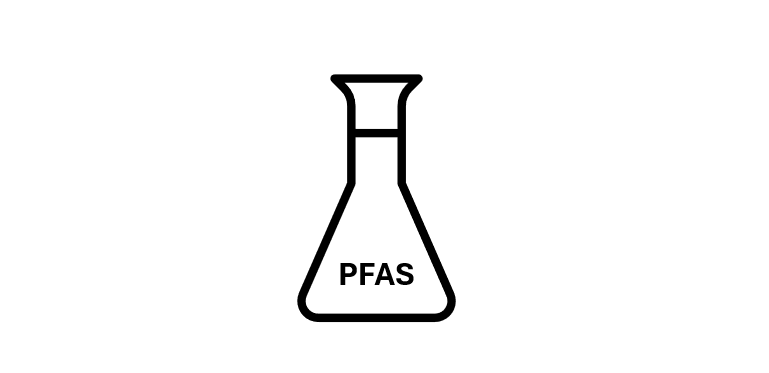
What Does the Label Look Like?
The rule requires a label in the form of an Erlenmeyer flask symbol with the word “PFAS” written inside the flask.
The Special Case of Complex Durable Goods
A complex durable good is a manufactured good composed of 100 or more components, with an intended useful life of five or more years, where the product is typically not consumed, destroyed or discarded after a single use.
Complex Durable Good PFAS Label
A label indicating the presence of intentionally added PFAS shall be included in the:
- consumer facing product specification sheet available to potential customers prior to purchase
- The label must be easily identified and legible. 10 pt font or larger is presumed legible.
- Consumer facing operating and maintenance manual associated with the complex durable good.
Both of these labels follow the Erlenmeyer flask label format as above.
The compliance pathway requires you to:
- Identify which of your products meet the complex durable good definition
- Confirm that intentionally added PFAS is present in those products
- Update product specification sheets to include the required label or disclosure
- Ensure operation and maintenance manuals are revised before January 1, 2027
Complex Durable Good Label Waiver Process
Companies may apply for a label waiver for a complex durable good if the complex durable good category is exempt and none of the product’s material containing intentionally added PFAS will ever come into direct contact with a consumer while the product is being used as intended during the useful life of the product.
The waiver request must contain the following information:
- Brief description of product with UPC
- The amount of the PFAS substance in the product
- Manufacturer contact information
- Identification of the specific PFAS intentionally added to the product or its components by chemical name and CAS number, or other chemical identifying number if no CAS exists
- An explanation of why the product should not require a label
Label waiver requests must be submitted by October 31, 2026. They will be considered approved pending review, and a final determination of whether to approve or deny will be issued by the department by June 1, 2027. If a label request is denied, the manufacturer must label the product for PFAS within 90 days of the label waiver denial. Approved label requests will expire 3 years after approval.
Online and Catalog Sales Have Additional Requirements
When consumers are unable to view labels at the time of purchase or receipt — such as in catalog or online sales — the manufacturer or retailer must clearly disclose to the prospective consumer prior to purchase that the product contains intentionally added PFAS. This can be done by providing a label or disclosure for PFAS using the Erlenmeyer flask format.
Requirements for Manufacturers selling through Distributors
If your products are sold through distributors, note that the manufacturer is responsible for applying required labels unless the wholesaler or retailer agrees in writing to accept that responsibility. Get those agreements documented now.
The Broader Compliance Picture
The labeling requirement is just one layer of a more comprehensive regulatory framework. New Mexico’s PFAS Protection Act establishes a phased, broad ban on products containing intentionally added PFAS: an initial ban on categories including cookware, dental floss, food packaging, firefighting foam, and juvenile products takes effect January 1, 2027; additional categories including carpets, cosmetics, and textiles follow in 2028; and a near-total prohibition applies by January 1, 2032, unless the product category is exempt or the product obtains a “currently unavoidable use” exemption.
Manufacturers will also be required to submit detailed reports about PFAS content in products sold in New Mexico on or before January 1, 2027, with ongoing annual updates required thereafter.
Why This Matters Beyond New Mexico
With the January 2027 deadline looming, New Mexico’s labeling requirements could signal a wave of state-level PFAS disclosure mandates. Other states are watching closely. Getting your PFAS inventory and documentation in order now positions you well regardless of where future requirements land.
What to Do Before January 1, 2027
If you manufacture, distribute, or sell products in New Mexico that contain intentionally added PFAS, here are the immediate priorities:
- Conduct a PFAS inventory across your product lines
- Determine which products qualify as complex durable goods
- Update specification sheets and O&M manuals with required labeling
- Prepare labels for physical retail and e-commerce products as required
- Review your distributor and retailer agreements to clarify labeling responsibilities
- Prepare your manufacturer reporting submissions
The rule is finalized. The deadline is fixed. The question now is whether your compliance program is ready.
Have questions about how New Mexico’s PFAS rule applies to your products? Feel free to reach out or drop a comment below.
 Valence Compliance Group
Leave a comment